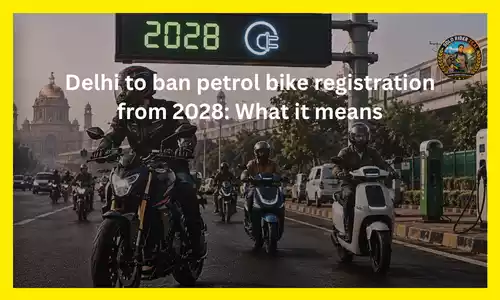
Delhi to ban petrol bike registration from 2028:what it means
Capital’s New EV Push could change India’s two wheeler market forever New Delhi | June 30, 2026 | Petrol Bike Registration ?
Delhi is preparing for one of the biggest changes in its transport history. under a new clean mobility plan, the city government has announced that new registrations of petrol and CNG-powered two wheelers will no longer be allowed from 2028. The move is aimed at reducing air pollution and accelerating the adoption of electric vehicles across the national capital. Times of India
For millions of motorcycle and scooter owners, this doesn’t mean existing vehicles will disappear overnight. However, anyone planning to buy a brand new petrol bike in Delhi after the policy comes into effect will need to rethink their options.
Why is Delhi Taking this step? (on Petrol Bike Registration)
By restricting new petrol and CNG two-wheeler registrations from 2028, the government hopes to encourage buyers to switch to electric scooters and motorcycles, helping reduce tailpipe emissions over time. Times of India
What does this mean for existing bike owners? (using Petrol bike)
If you already own a petrol motorcycle r scooter, there’ no immediate reason to panic.
As things stand:
- Existing registered petrol and CNG two-wheelers can continue to be used according to prevailing vehicle regulations.
- The restriction applies only to new vehicle registrations after the policy takes effect.
- The government is expected to release more detailed implementation guidelines before 2028. Times of India
Impact on the Motorcycle industry
This announcement could reshape India’s two-wheeler market in several ways.
manufacturers may accelerate the launch of electric motorcycles and scooters specifically designed for urban riders. Brands that already have a strong EV portfolio could benefit from rising demand, while companies focused on petrol motorcycles may need to expand their electric offerings much faster.
Dealerships, charging infrastructure providers, and battery technology companies are also expected to play a bigger role as the transition gathers pace.
Will Other Cities Follow?
Delhi has often introduced transport policies that later influence other Indian states. While there is no confirmation that similar restrictions will be adopted elsewhere, industry experts believe major metropolitan cities could closely watch the outcome before making similar decisions.
If Delhi’s EV transition proves successful, it may become a blueprint for future urban mobility policies across India.
What Riders should do now?
If you’re planning to buy a motorcycle in the next few years, there’s no need to rush into a decision. However, this announcement is a good reminder to compare both petrol and electric options carefully.
Electric motorcycles continue to improve in terms of performance, charging speed, and riding range. For city commuters, they are becoming increasingly practical as charging networks expand.
At the same time, touring enthusiasts and long-distance riders may continue to prefer petrol-powered motorcycles until charging infrastructure becomes more widespread across highways.
Solo Rider Zeal take
The 2028 registration policy is more than an environmental announcement – it signals the direction India’s two-wheeler industry is heading. While petrol motorcycles are far from disappearing, the future of urban commuting is clearly shifting toward electric mobility.
For riders, the next few years will bring more choices, better technology, and a rapidly evolving market. Staying informed today will help you make smarter buying decisions tomorrow.
Source: Government Policy announcement reported by major national media Times of India
Discover More
Latest Posts

Sanjay
Hi, I'm Sanjay, a motorcycle traveler, storyteller, and a founder of Solo Rider Zeal. I share real road trip experiences, travel guides, rider tips, motorcycle news, and adventure stories to help fellow riders discover the joy of open road and create unforgettable memories!



 English
  Hindi
Hindi